Drainage in Hamilton
Blocked Drains Hamilton
Blocked drains are a constant job in Hamilton, and the suburb's age explains why. Everything from a slow basin to a root-bound sewer gets cleared across the suburb and nearby Islington and Hamilton East. The full service list sits on our Hamilton home page if you want the wider picture first.
$0 Call Out · Same-Day Where the Schedule Allows · Licensed Local Plumbers · We Make It Right, No Questions Asked
Why drains block so easily on this ground
The drainage under this suburb dates back to the 1870s, and the pipe the township laid is still doing the work under many streets. Four things turn that into repeat blockages.
Township-era clay lines
Suburb ground was first drained in the 1870s with glazed clay and earthenware pipe. That material shifts and fractures as the decades pass, and every crack becomes an entry point.
Roots hunting water
Mature trees along the older Federation streets and around Gregson Park push roots into earthenware sewer junctions. Once inside, they grow into a mat that catches paper and everything following.
Grease from the dining strip
The restaurants along Beaumont Street send fat and grease into local lines every night. Grease hardens on pipe walls in layers, and each new layer catches more than the last.
Rain on low ground
This suburb sits low on the Throsby and Styx Creek floodplain, so east coast low downpours surcharge stormwater drains. Water backs up gully traps and floods the lowest yards first.
Signs you have a blocked drain
One slow fixture might be its own small choke. When the whole line is blocked, the signs show up in several places at once.
- Two or more fixtures backing up together, like a shower that floods while the toilet gurgles
- Water rising through the outside gully or overflow relief gully, especially after rain
- A sewer smell inside or around the yard
- A toilet that fills higher than usual or drains with a glug
- Gurgling noises from the floor waste when the washing machine empties
Any of these deserve a call before they turn into an overflow. If sewage is already rising through a floor waste or into the house, the emergency plumbing page is the one to read, and ring us straight away.
Slow drain or main-line choke?
Not every blockage needs the same response. A few quick checks tell you which job you have.
One fixture only
Every fixture affected
Worst after rain
How we clear a blocked drain
The work runs to a simple rhythm: confirm the choke, clear it the right way, then prove the line is clean before we pack up.
- 1
Confirm the blockage
We ask which fixtures are affected and test the line, because a single basin is a different job to a main-line choke.
- 2
Clear it with the right method
Fragile earthenware needs a gentler touch than a modern PVC run, and grease responds to high-pressure water where a mechanical cutter just pokes a hole.
- 3
Flush and prove
Water gets run through at volume, and where the blockage was stubborn we camera the line so you can see it flowing clean.
- 4
Fix what caused it
If the footage shows a cracked joint feeding roots into the line, we quote the lasting repair so the next blockage never happens.
Step 3 matters most on these old lines. A clear that leaves half a root mat in the pipe is a clear you will be paying for again in six months.
After the clear
Jetting for stubborn chokes
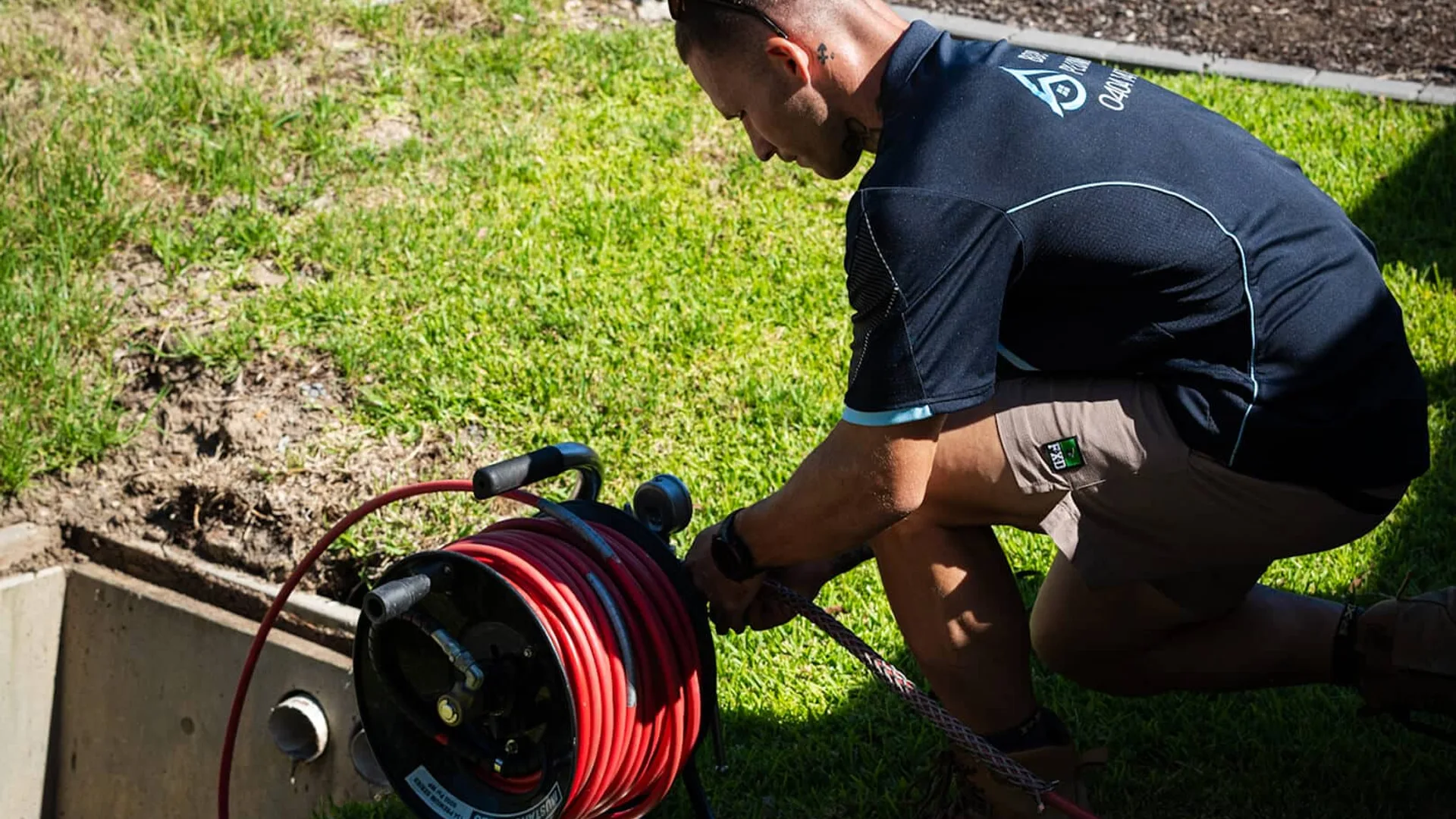
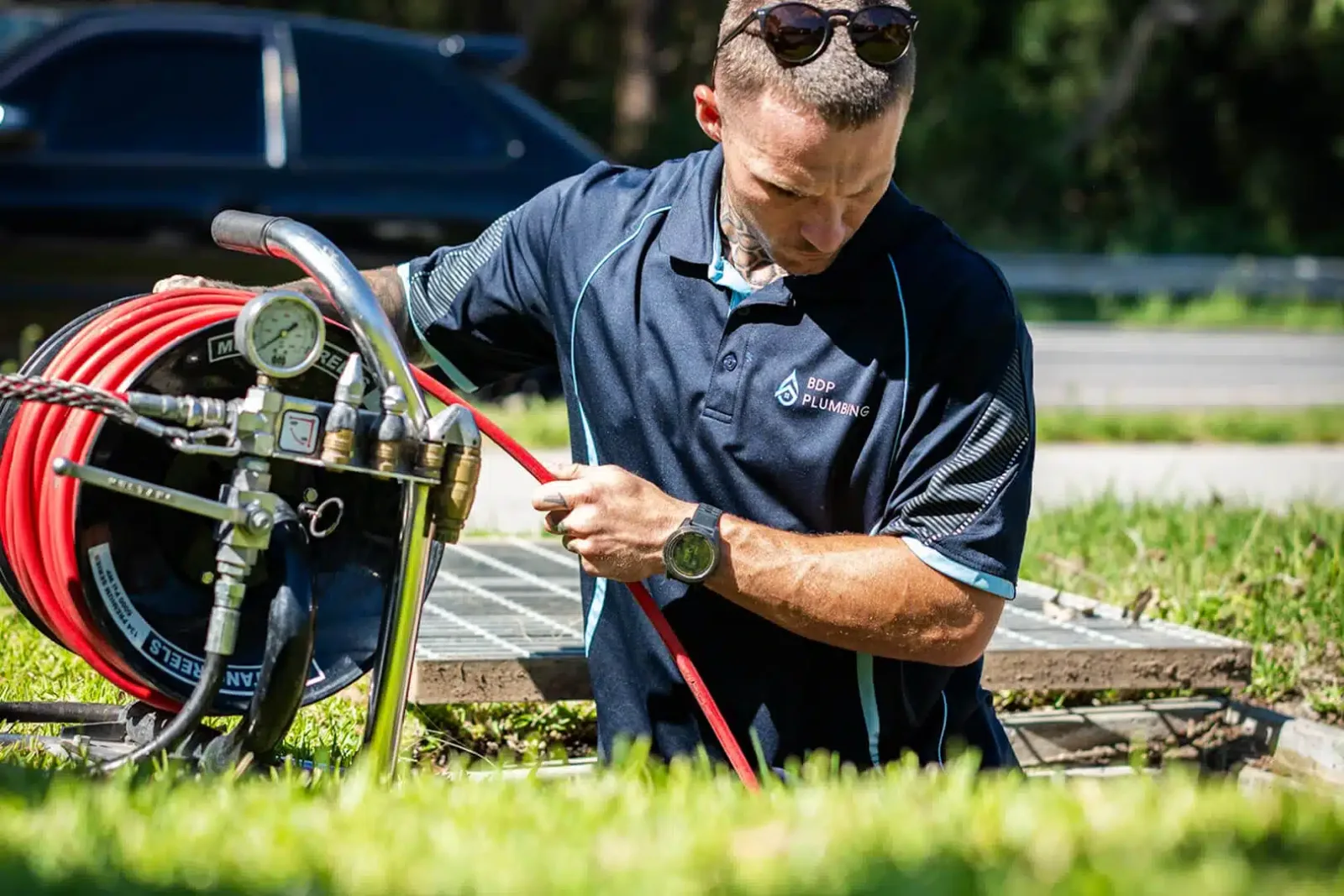
Packed grease or fibrous roots need high-pressure jetting, which scours the pipe walls clean rather than punching a tunnel through the middle of the block. Details sit on the hydro jetting page.
Camera before repairs
Guessing at a choke in a century-old line is expensive. A CCTV drain inspection shows exactly where roots entered and what shape the pipe is in, so the quote covers the real fault.
What drives the price
Pricing follows what the camera and test find: where the choke sits, how old the pipe is and whether roots need a repair after the clear. The figure reaches you first.
Sewer and stormwater are different
Sewer and stormwater are different systems, and the fix differs too. Downpipes, pits and surcharging gullies are covered on the blocked stormwater page, sewage side on the blocked sewer page.
Why choose us for blocked drains in Hamilton
$0 Call Out
Quote First, Always
Licensed Local Plumbers
Made Right, No Questions Asked
The drainage hub lists every service this run covers, from camera inspections to jetting, so you can see the whole picture on the drainage page.
Blocked drain questions answered
Why do drains block so often in the older streets?
The township's first drainage was glazed clay and earthenware, laid from the 1870s. It cracks as it ages, and mature street trees push roots straight into those joints.
Can I clear a blocked drain myself?
A plunger is worth a try on one slow basin. If two fixtures back up together, or water rises through a floor waste outside, the choke sits in the main line.
How do you find out what is blocking the drain?
A camera goes down the line and records the whole run. You see the roots at their entry joint, any cracked sections and grease build-up on screen before approving the repair.
What happens after the drain is cleared?
Clearing is half the job. The pipe gets flushed hard, and a choke that fought back gets camera-checked before we call it done. Any crack found is priced as its own lasting repair.
Do east coast lows make blockages worse?
They do. Low ground on the Throsby, Styx and Cottage Creek floodplain lets heavy rain surcharge stormwater lines, so a drain that coped all winter can overflow in a single downpour.
Will clearing a drain damage old clay pipes?
Not when the method suits the pipe. Fragile earthenware copes better with high-pressure water than mechanical cutters, so jetting scours the walls clean instead of gouging century-old drainage.
Plumbers in Hamilton and the suburbs around it
Ready to book the clear
Call (02) 4063 3422 and tell us what's happening. $0 call out across Hamilton, a clear quote before any work starts, and a job that gets made right if it isn't right the first time.